Warm Halloumi Salad

There are certain restaurant dishes that completely take over your ordering habits, and for me, warm halloumi salad is one of them. The second I see it on a menu at an Israeli restaurant, I’m ordering it.

Over the years, I’ve had so many different versions — piled into crispy edible baskets, layered over greens, topped with sautéed vegetables, sometimes sweeter, sometimes saltier — but they all had the same irresistible combination of textures and flavors: warm salty cheese, savory vegetables, fresh greens, and that glossy teriyaki-style sauce that pulls everything together.

This version is inspired by all of those salads I couldn’t stop thinking about afterward. Peppery arugula gets topped with sautéed red peppers, onions, and mushrooms, then finished with sesame-crusted halloumi that’s crisp on the outside and soft and chewy in the center. And then comes the sauce. Sweet, savory, sticky, and deeply umami, it coats the warm vegetables and halloumi in the best possible way.

I especially love serving it for Shavuot because it feels festive without trying too hard. Halloumi always gives a dish a little drama, and paired with the warm vegetables and teriyaki flavors, it totally steals the show.

Hearty, comforting, salty, fresh, and honestly craveable enough to build an entire meal around – the perfect holiday centerpiece!

Related Recipes:

halloumi fries
halloumi cheese waffles
camemebert en croute salad
Greek salad with feta croutons
pizza salad with cheese croutons

Post a Comment

Muhammara Carpaccio

Muhammara, but make it dinner-party worthy. This deconstructed version takes everything I love about the classic Middle Eastern dip and stretches it out across a platter like a carpaccio: silky ribbons of roasted peppers, toasted walnuts, pomegranate molasses, herbs, feta, and warm spices layered separately so every bite tastes a little different from the last. It has all the familiar flavors of traditional muhammara, but with more texture, more contrast, and a presentation that makes people stop before they dig in.

Muhammara originated in Aleppo, Syria, where it became known as a rich spread built around roasted red peppers, walnuts and breadcrumbs. The name itself comes from the Arabic word ahmar, meaning “red,” a nod to its deep color. Traditionally, muhammara combines roasted peppers with walnuts, breadcrumbs, olive oil, pomegranate molasses, and warm spices like Aleppo pepper and cumin. The result is smoky, sweet, tangy, nutty, and slightly spicy all at once. Like many dishes throughout the Levant, it spread across borders and kitchens, taking on small changes depending on region and family traditions.

I love keeping the flavor profile intact while changing the form entirely. Instead of blending everything into a dip, I separate the ingredients and let each one have its own place on the platter. Thin roasted pepper strips become the base, laid out almost like carpaccio. Toasted walnuts and cumin-scented panko add crunch, pomegranate molasses brings that signature sweet tang, fresh herbs brighten everything, and a drizzle of good olive oil ties it all together.

And then I add feta.

No, feta is not traditional in muhammara. But Shavuot is all about dairy, and salty creamy feta works almost suspiciously well here. Against the sweet roasted peppers and sticky pomegranate molasses, it adds richness and sharpness that turns it into something that feels made for a holiday table. It shifts the dish from dip territory into appetizer territory.


Post a Comment

Italian Ricotta Cherry Pie

There are desserts that become popular because they are beautiful, and then there are desserts that survive because history forced them to. Crostata di ricotta e visciole — the iconic Roman Jewish sour cherry and ricotta tart — is both.

I first tried the famous pie when I visited the Jewish ghetto in Rome in 2021, and quickly learned that the ricotta cherry pie is a traditional Roman pastry available in every kosher restaurant! The texture of the ricotta is a lot firmer than what we get in states, more similar to farmer cheese.

ricotta cherry pies in the window of Boccione

Legend has it that during centuries of papal rule, Roman Jews lived under brutal restrictions, confined to the ghetto and limited in what they could own, sell, and eat. According to the story most commonly attached to this tart, Jews were forbidden by the Pope from openly selling dairy products. Bakers began hiding the sweetened ricotta beneath a layer of dough so the tart appeared to be a simple pie from the outside. What began as necessity became one of the great pastries of Rome.

Boccione’s famous ricotta cherry pie

Today, the most famous version is still associated with the tiny Roman bakery Boccione, the nearly 200-year-old bakery known as the “burnt cakes factory” tucked into the Jewish Ghetto, known for its dark, almost burnt-looking pastries and ricotta pies with blistered tops (because of the old ovens that have a very high temperature) and jam peeking through cracks in the crust. It is rustic, imperfect, deeply Roman, and unforgettable.

I wanted something inspired by that pie but slightly freer and more rustic — somewhere between a traditional crostata and a galette. I started with authentic pasta frolla, the classic Italian sweet pastry dough that is softer and more cookie-like than American pie crust. Then came the ricotta filling, the sour cherry preserves, and eventually the realization that my American ricotta was far too loose for a freeform galette. So the dessert evolved back into what it probably always should have been: a proper Italian ricotta tart.

The result was one of those desserts that tastes old-world in the best way. Buttery crust. Bright cherry jam. Creamy ricotta. Not cheesecake exactly. Not pie exactly. Something more rustic and soulful, and just perfect for Shavuot.


ricotta cherry pie at Casalino in the Jewish Ghetto


Related Recipes:

cherry yogurt popsicles

halva and ricotta stuffed figs

pumpkin ricotta pancakes with cranberry syrup

Post a Comment

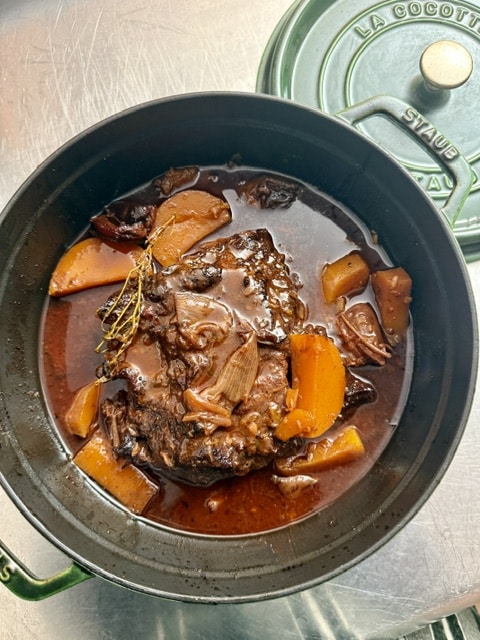
Double Coffee Roast with Chestnuts & Shallots

I’ve always loved coffee—not just as a drink, but as an ingredient in cooking. Its natural acidity and deep, roasted flavors make it a surprisingly perfect way to braise meat. It tenderizes while adding rich, layered notes that bring out the best in beef without being sharp or overpowering. For Passover, when flavors need to feel both comforting and elevated, coffee quietly becomes the hero of the dish, so I used it TWICE – both in the rub, and in the braising liquid.

Chestnuts are the perfect partner. Their soft, slightly sweet, creamy texture absorbs the coffee and maple syrup beautifully, adding depth and subtle sweetness without overwhelming the meat. Together, coffee, chestnuts, and a touch of maple create a braise that is richly savory, balanced, and full of flavor – perfect for a holiday meal.

Related Recipes:

pomegranate roast with roasted apples and gremolata
hot honey French roast
charoset london broil

Post a Comment

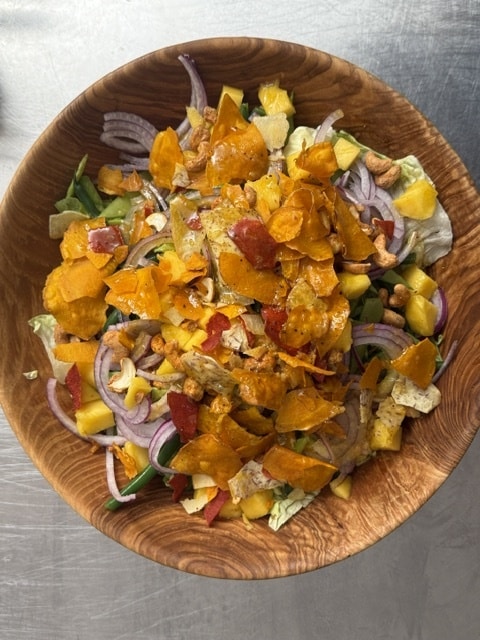
Jeweled Crispy Rice Salad

This salad was inspired by Persian jeweled rice — that stunning celebration dish studded with pomegranate, pistachios, and dried fruit. I wanted those same jeweled flavors, but lighter and fresher, so I turned it into a salad. The crispy roasted rice is my nod to tahdig, the golden crust everyone fights over, scattered throughout instead of hiding at the bottom of the pot. It makes the perfect Purim appetizer — a little taste of Persia in salad form, festive, colorful, and full of crunch.