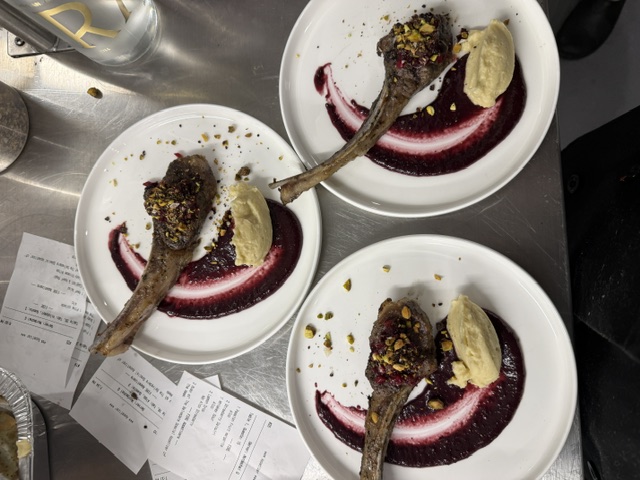
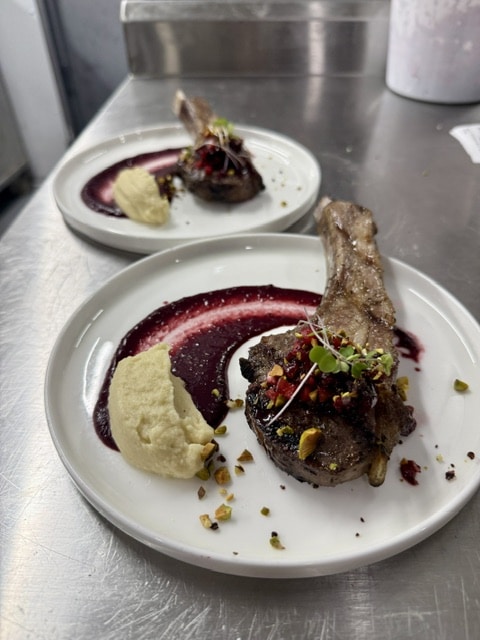
I have never been a lamb person, and if you’ve been here for a bit, you probably know that. The two single foods I have an aversion to? Lamb and goat cheese, and for similar reason – they taste like barn. Yup. BARN. Like one of my followers said: it tastes like licking a barn wall.
I get it. I really REALLY do.
Then, last week at my Busy at the Belvedere pop-up, something happened. One might call it a nightmare. My boss delivered a box of lamb chops to the restaurant, and said, “I want you to use this for your appetizer of the week next week.” I had already decided to make cherries the star ingredient of the week’s menu, and it made for a natural pairing. But how could I cook something I would never actually eat?
So I decided to get out of my comfort zone and cook a lamb dish that I WOULD WANT TO EAT. And that meant figuring out exactly what I didn’t like about lamb and finding a way to change it.
The answer, at least for me, was in the marinade.
I seasoned the lamb with garlic, lemon zest, cumin, celery seed, olive oil, salt and pepper and let it marinate for several hours. The lemon and garlic brighten the meat, the cumin adds warmth, and the celery seed brings in a subtle, savory herbal note.
And the celery seed wasn’t there by accident. I wanted the lamb to have a flavor connection to the celery root purée and the fresh celery salad on the plate. Celery seed is incredibly concentrated compared to fresh celery. It has a deeper, earthier, slightly grassy flavor with a faint anise-like quality. Used sparingly, it gives the lamb a subtle celery backbone without making it taste like you dumped celery salt all over it. It also happens to be a great spice for rich meats. Its herbal, slightly bitter character helps balance the richness of lamb and gives the marinade another layer of savory depth.
And no, celery seed doesn’t magically remove the gaminess from lamb or tenderize it. The marinade isn’t performing some kind of culinary exorcism. The salt, aromatics, lemon and spices, combined with proper cooking, are what helped create a more balanced flavor.
Most importantly, it worked. I liked the lamb. Actually, I really REALLY liked the lamb.
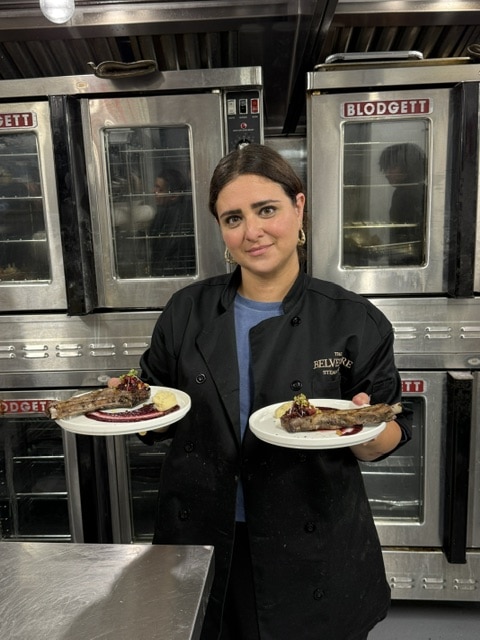
The chops were juicy and deeply flavorful without having that aggressive gaminess I had always associated with lamb. The cherries brought sweetness and acidity, the celery root purée was silky and earthy, the fresh celery kept everything bright, and the pistachios added crunch.
I had managed to make a lamb dish that I would actually want to eat. And that got me thinking about food aversions in general.
I recently heard that when babies are introduced to a new food, it can take as many as 18 exposures before they decide whether they like it. Eighteen! We expect a baby to taste broccoli once, spit it out, and somehow make a lifelong determination about broccoli. Yet as adults, we do exactly that.
We try something once. Maybe we have a bad experience. Maybe it was poorly prepared. Maybe we tasted it at the wrong age or simply weren’t ready for it. And then we declare: “I don’t like that.” We write foods off all the time.
Now, I’m not suggesting you force yourself to eat something you genuinely hate 18 times. Life is too short for that. But I do think there’s something to be said for being willing to try again. Because sometimes you don’t hate the ingredient. You hate the way it was prepared. Sometimes you haven’t found the right combination. And sometimes, apparently, you just need to cook the lamb yourself.
This dish was my experiment in doing exactly that. I took an ingredient I had avoided for years and built a plate around flavors I already knew I loved: cherries, celery, pistachios, lemon and herbs. And somewhere between the first bite and the last, I realized I had officially converted myself.
Maybe I’m not a lamb hater after all. Maybe I just needed the right lamb chop.
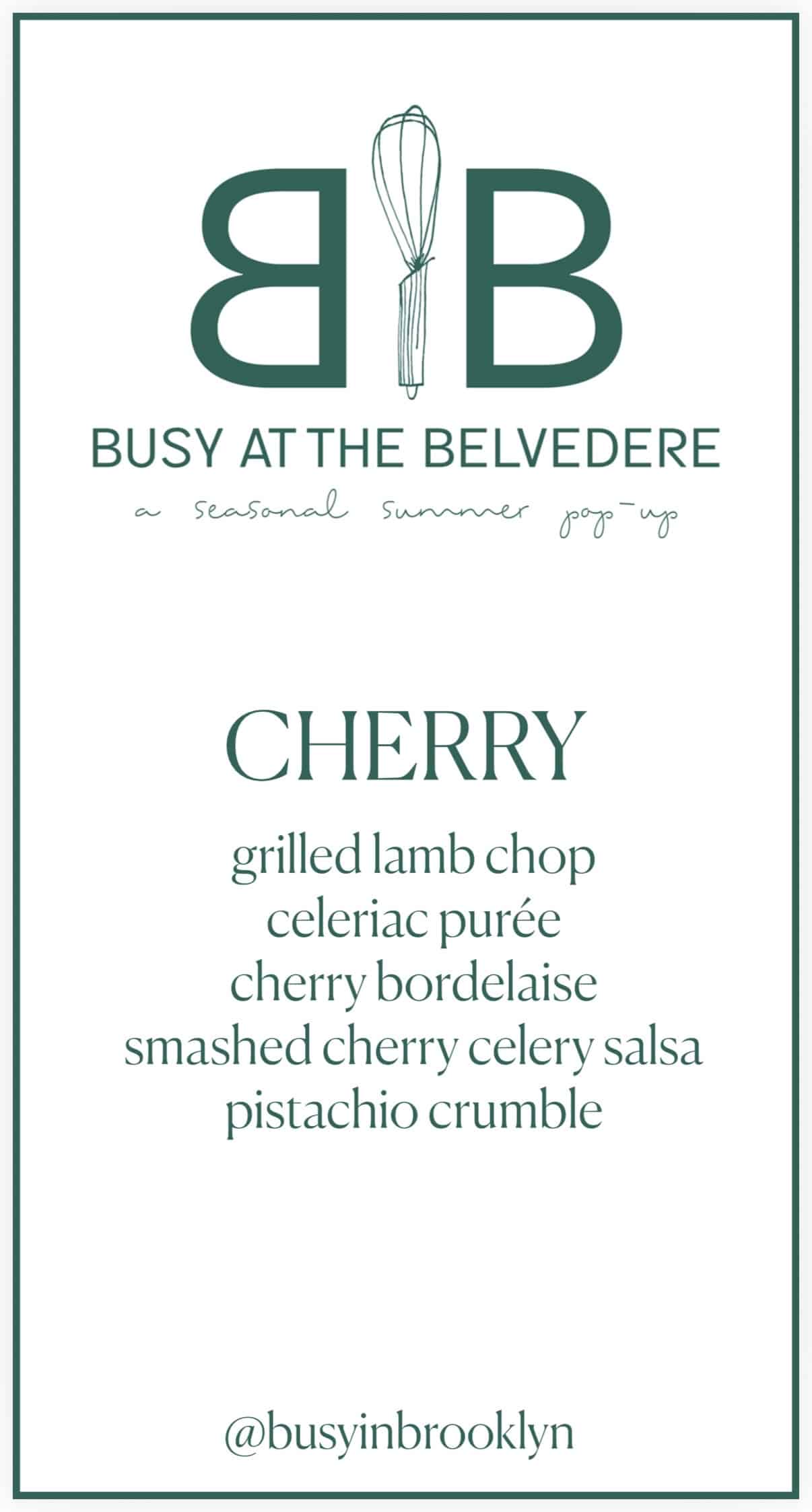
Marinated Lamb Chops
8-10 lamb chops, 1–1½ inches thick
1 tsp ground cumin
1 tsp dried thyme (may sub rosemary)
1/2 tsp celery seed
1 1/2 tsp kosher salt
½ tsp black pepper
1/2 cup extra virgin olive oil
3 garlic cloves, grated on a microplane
Zest of 1 lemon
Mix the celery seed, cumin, thyme, salt, pepper, olive oil, garlic and lemon zest. Massage the mixture into the lamb chops. Cover and refrigerate for several hours.
Grill the chops for 2 minutes per side and finish in the oven for 2-3 minutes or until medium rare.
Celery Root Purée
2 lb celery root, peeled and cut into chunks
1 leek, white and pale green part, chopped
2 celery stalks, diced small
1 small shallot, diced small
2 tbsp olive oil
1½–2 cups chicken or vegetable stock
1 tsp kosher salt, plus more to taste
salt and pepper, to taste
Sweat the shallot, leek and celery in olive oil over medium-low heat without browning.
Add the celery root, salt and enough stock to almost cover. Simmer gently, covered, until completely tender, about 20–25 minutes. Blend the vegetables until extremely smooth.
For restaurant service, pass the purée through a chinois or fine sieve. You want it smooth enough to swipe across the plate without breaking.
Cherry-Celery Salsa
2 cups fresh cherries, pitted and diced
1-2 stalks celery, finely diced
1 small shallot (or 1/2 small red onion), finely diced
2 tbsp lemon juice
3 tbsp olive oil
2 tsp honey
1 tsp sumac
salt and pepper, to taste
Mix and dress shortly before serving.
Red Wine Cherry Reduction
3 cups fresh cherries, pitted
1 large shallot, finely diced
2 cloves garlic, minced
2 tbsp lamb fat (or olive oil)
½ cup red wine
1½ cups lamb or beef stock
1 tbsp honey
1/2 tsp dried thyme
salt and pepper, to taste
Sweat the shallot and garlic in lamb fat until soft but not browned. Add the cherries and simmer for 8 minutes, stirring often. Add the red wine and reduce by about half. Add the stock, honey and thyme. Simmer until the cherries are very soft and the liquid has reduced to a glossy sauce consistency.
Blend in a high powered blender and strain through a fine mesh sieve.
Pistachio-Sumac Crumble
1 cup chopped raw pistachios, toasted
2 tbsp flaky salt
2 tbsp sumac
zest of 1 lemon
Stir to combine.